
Working With Natural Slate
Natural slate has been the premium roofing material on British houses for over 200 years, and on Leicester's Victorian and Edwardian housing stock it's still the original covering on a huge proportion of properties. A well-laid Welsh slate roof from 1880 will routinely still be doing its job today — and with proper repair work, will outlast most modern materials by another 50 years.
We work with both Welsh slate (Penrhyn, Cwt-y-Bugail and similar quarries) and Spanish slate from major producers like CUPA and SSQ. Welsh slate is the gold standard for matching original work on Victorian Leicester properties — the colour, texture and longevity are second to none, and it's what we recommend on heritage and listed work. Spanish slate (T1 grade) is a high-quality alternative at around 60-70% of the cost, perfectly suitable for modern installations and visually almost indistinguishable from Welsh.
Spot Repairs & Slate Replacement
The single most common slate roof job is replacing individual broken or slipped slates. Slates fail one of two ways: the nail rusts through (after 80-100 years on iron nails, 60-80 on aluminium nails) and the slate slips down the roof; or the slate itself cracks across a fixing hole, usually from frost or impact. Either way, the fix is to lift the slates above the failed one, slide a new matching slate into position, and secure it with a copper or lead tingle (a thin strip nailed up under the courses above and folded over the bottom edge of the new slate).
Properly done, a tingle repair is invisible from the ground and lasts as long as the surrounding slates. Mortar repairs along the bottom edge of slates — which you'll often see on cheap jobs — are not weatherproof, look terrible, and trap moisture in the slate above. We never use mortar to retain slates.

Full Re-Slating
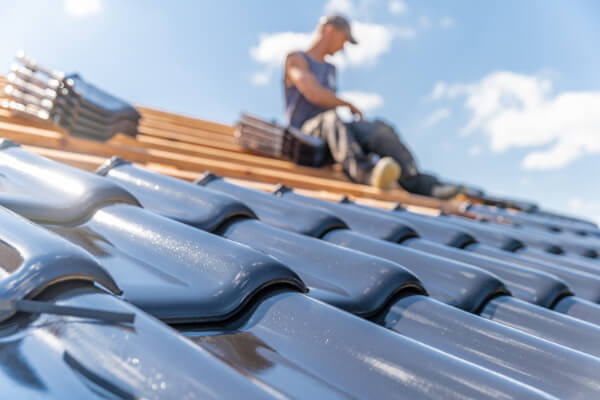
When a slate roof has reached the point where multiple slates are slipping each year, the underlay is brittle and crumbling, or the original slate batten gauge has been disturbed by past repairs, full re-slating is the right answer. We strip the existing slates carefully (most can be re-used if we're working on Welsh slate — the originals are often better than anything available today), lay modern Klober breathable membrane and treated softwood battens, then re-lay the original slates with new copper nails or stainless steel slate hooks to BS EN 12326.
Where the originals can't be saved (chipped, undersized, mixed sizes from previous repairs) we'll quote for fresh material in either Welsh or Spanish to match the original size and colour as closely as possible. A re-slated Welsh slate roof should give 80-100 more years of service life.
Hooks Vs. Nails
Traditional slating uses copper nails through pre-drilled or pre-punched holes in the head of each slate. Modern alternative is the slate hook — a stainless steel hook fitted at the foot of each slate, which means no nail holes and easier future repair (you can lift one slate without disturbing the courses around it).
Hooks are particularly good for natural slate on exposed sites, because there's no risk of frost cracking around a nail hole. Both methods are accepted by the major slate manufacturers and both will give 80+ years of service. We'll discuss the right choice for your specific roof at quote stage.

Frequently Asked Questions
Can you match my original slate?
Welsh slate matching is usually possible — the major quarries still produce slates in the original sizes and weather to the same colour over time. Spanish slate is a near-match for most Welsh originals at lower cost.
How long does a slate roof last?
Natural Welsh slate: 80-100+ years. Spanish slate (T1): 75-100 years. Failure is almost always at the nails, not the slate itself — which is why a re-slate using the original slates with new fixings can give you another century.
Why are some of my slates slipping?
Almost always nail rust. Original iron and steel nails on Victorian roofs have a service life of about 80-100 years before they fail. Once one or two start to go, others follow within a year or two.
Is mortar a proper repair for a slate roof?
No — mortar daubs along the bottom edges of slates are a cheap bodge that traps moisture, looks terrible, and stops you ever doing a proper repair to the slate above. We always use copper tingles or full nail-back repairs.
How much does slate work cost?
Spot repairs (1-5 slates with tingles) typically £150-£400. Larger patch repairs £400-£900. Full re-slate of a 3-bed semi in Welsh slate is usually £15,000-£25,000 inclusive of scaffolding and breathable membrane upgrade.