
What Is A GRP Fibreglass Roof
GRP — glass reinforced polyester — is a flat roofing system made by laminating layers of glass fibre matting with polyester resin directly onto a plywood deck, then finishing with a pigmented top coat. The end result is a single seamless waterproof skin bonded fully to the deck, with no joints anywhere across the roof and no flexible membrane that can puncture or split. Done well, a GRP roof has a 25-30 year service life with virtually no maintenance.
It's become the standard choice for replacement garage roofs, bay roofs, dormer cheeks, and small extensions across Leicestershire over the past 15-20 years, largely because it's faster to install than torch-on felt, much more durable than older felt systems, and finishes with a hard glossy surface that handles foot traffic, leaves and weather without complaint.
When GRP Is The Right Choice
GRP is at its best on flat or low-pitch roofs of small to medium size — up to about 100m². It needs a sound, dry, well-fixed plywood deck (18mm WBP marine ply, screwed at 200mm centres into the joists), and it needs to be installed in dry weather above 5°C to cure properly. On larger roofs, EPDM single-sheet rubber is usually a better choice because it can be installed in a single piece with no laps. On heated commercial roofs, single-ply is normally better still.
We use it most often on garage roofs, single-storey rear extensions, dormers, bay roofs, and balcony decks. Where the existing roof is felt that's reached end-of-life and needs replacing entirely, GRP is often a sensible upgrade because the polyester resin and topcoat give a much better surface for foot traffic than felt does.
How A GRP Installation Works
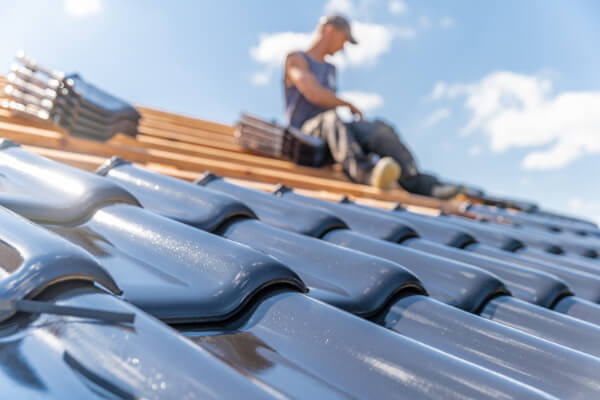
We strip the existing roof down to deck level (or replace the deck entirely if it's wet, soft or unsupported). The new 18mm OSB or WBP plywood deck goes down with proper falls to the outlets, screwed not nailed, with expansion gaps at the perimeter. Pre-formed GRP edge trims are fitted at the perimeter, then the resin and matting is laid in two coats, fully wetted out, with rollers used to consolidate the laminate and remove air voids.
Once the laminate has cured (usually overnight), the pigmented topcoat is applied as a single flood coat in your chosen colour — standard dark grey is most common, but light grey, mid-grey, slate green and terracotta are all available. Drainage outlets, soakers around abutments, and pipe collars are all dressed in as part of the lamination, so there are no separate flashings to fail later.
Repairs Vs. Full Re-Coat
Small areas of damage to an existing GRP roof — cracks, blisters, stress cracking around fixings — can be repaired by grinding back the affected area, applying new resin and matting, and re-finishing with topcoat. A full re-coat is needed when the topcoat across the whole roof has chalked, dulled or started to break down (usually after 15-25 years), which can be done by sanding the existing surface and applying fresh topcoat without stripping the laminate underneath. Full replacement is only needed when the laminate itself has failed or the deck below has rotted.

Frequently Asked Questions
How long does a GRP roof last?
A properly installed GRP roof from a quality system has a service life of 25-30 years on the laminate, with the topcoat needing renewal at around 15-20 years to keep it looking fresh.
Can you walk on a GRP roof?
Yes — this is one of GRP's main advantages over felt. The laminate is rigid and bonded to the deck, so you can walk on it for cleaning, gutter clearance or aerial maintenance without damaging it.
Why does the resin need to be installed in dry weather?
The polyester resin cures by chemical reaction and needs both a dry surface and ambient temperature above 5°C. Moisture trapped under the laminate causes blistering.
Is GRP better than felt?
For most domestic flat roof applications, yes — longer life, no joints, walkable surface, better appearance. SBS torch-on felt is still a sensible choice on traditional buildings or very large roofs where GRP becomes uneconomic.
Does GRP have a warranty?
The major systems carry 20-25 year manufacturer warranties on the materials when installed by an approved contractor. Our 10-year workmanship guarantee runs alongside this.